
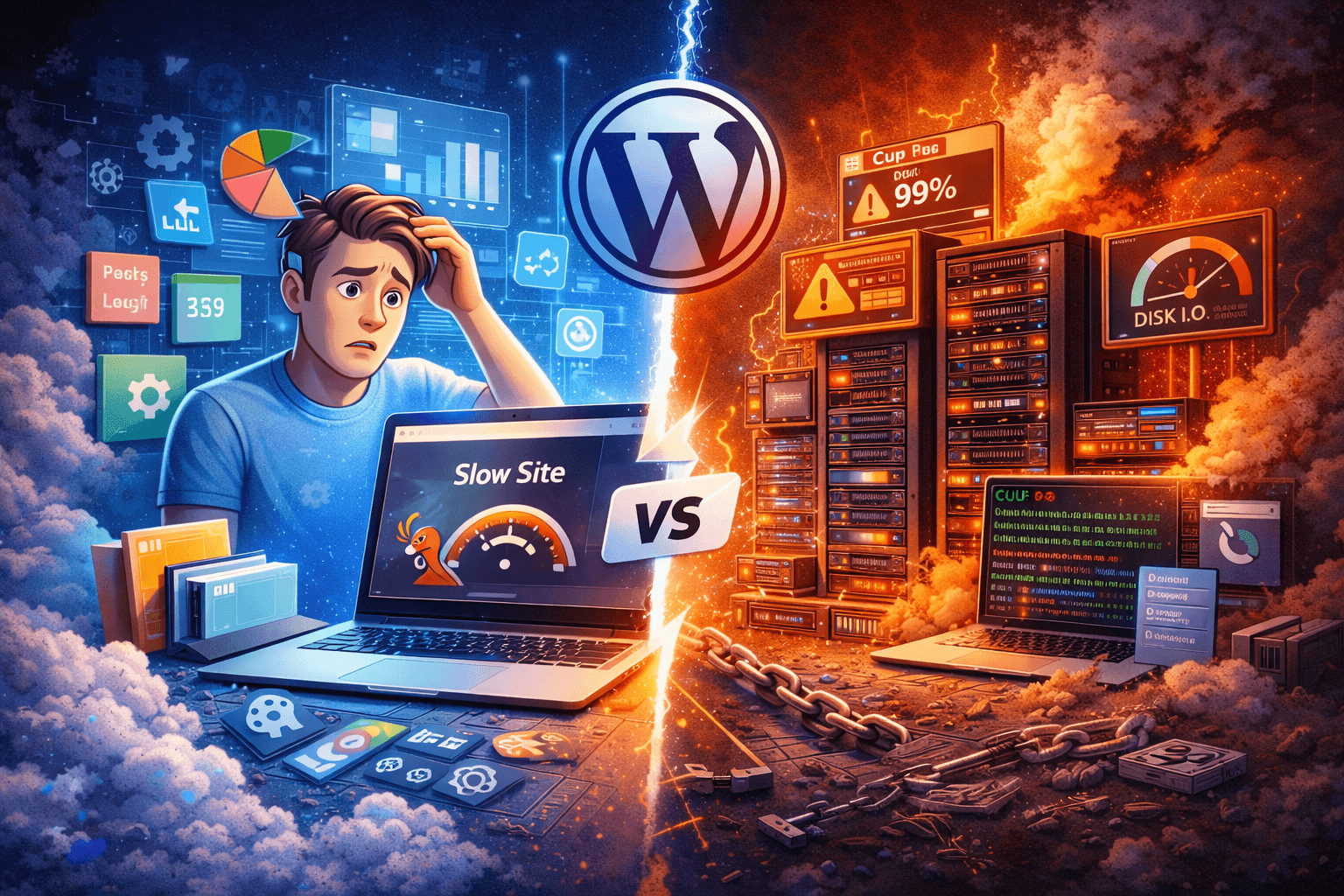
The Myth: Themes and Plugins Decide Performance
For years, WordPress performance advice has centered on themes and plugins. The idea is simple: pick a lightweight theme, reduce plugin count, and you get a fast site. That worked when hosting stacks were simpler and traffic was lower. In 2026, it is no longer true.
The biggest performance wins now come from infrastructure, not from trimming a few kilobytes in a theme file.
Even Lightweight Themes Fail on Bad Hosting
A fast theme cannot outrun a slow server. If your hosting stack is saturated or misconfigured, every request slows down regardless of how clean your front end is. You can ship a minimal theme and still have a sluggish site if the server cannot respond quickly.
The Real Culprits: CPU Steal, Noisy Neighbors, Disk I/O
Modern WordPress sites compete for shared resources on many hosts. When the platform is oversold, performance falls apart in ways you cannot fix in WordPress.
- CPU steal from other tenants increases response times.
- Noisy neighbors trigger unpredictable spikes and slowdowns.
- Disk I/O limits make database queries and backups crawl.
These issues are invisible at the theme layer, but they dominate real-world performance.
PHP Workers and Memory Limits Are the Real Bottlenecks
Your theme does not control how many concurrent requests can be processed. PHP worker limits and memory ceilings do.
- Too few PHP workers cause queuing and slow page loads.
- Low memory limits trigger fatal errors under real traffic.
- Poor PHP-FPM tuning leads to timeouts and inconsistent speed.
You can optimize CSS all day, but if the PHP layer is congested, you will still lose.
Hosting Architecture Beats Page Builders
The debate about page builders misses the point. A well-architected hosting platform can make heavy pages feel fast by optimizing caching, server response time, and delivery.
- Full-page caching reduces PHP load.
- Edge delivery cuts global latency.
- Object caching removes repeated database work.
- Isolated containers prevent cross-site interference.
This is why hosting architecture now matters more than the frontend stack.
What to Prioritize in 2026
If you want a fast WordPress site, start with the infrastructure.
- Dedicated or isolated resources per site.
- A tuned PHP stack with enough workers.
- Fast storage and reliable I/O.
- CDN and edge caching by default.
- Real monitoring to detect bottlenecks early.
The Takeaway
Themes and plugins still matter, but they are not the main performance lever anymore. Hosting is. If you are serious about speed, treat WordPress like a production application and put the right infrastructure behind it.
XeroWP focuses on infrastructure-first performance so you do not have to chase plugin-based fixes.


