
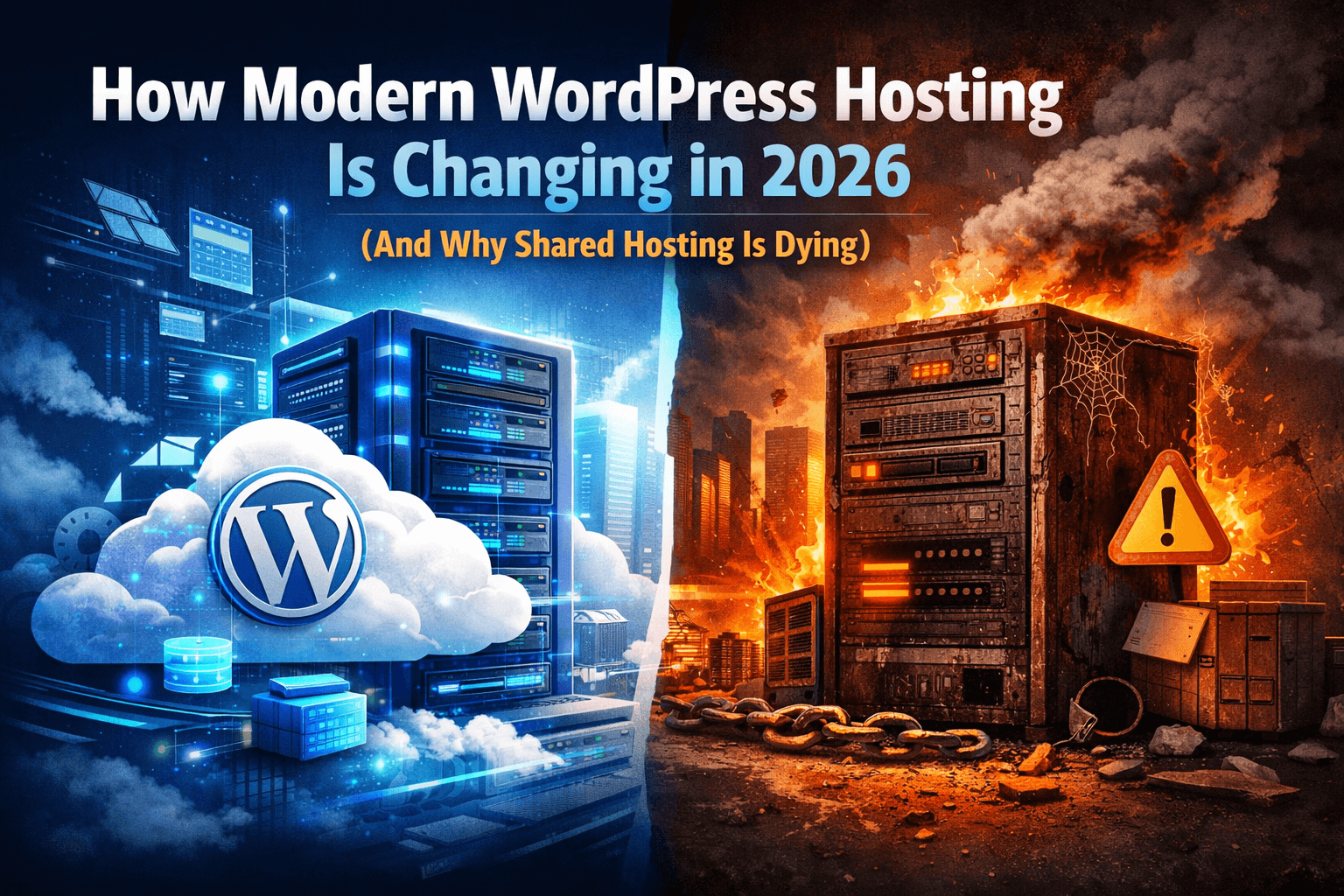
The Shift Is Real in 2026
Shared hosting used to be the default for WordPress because it was cheap and simple. In 2026, it is simply not competitive. Sites need speed, isolation, and reliability that shared servers cannot deliver. The market has moved to modern hosting stacks that treat each WordPress site like a production application, not a folder on a crowded server.
Why Shared Hosting Is Dying
Shared hosting fails in the places that matter most right now:
- No true isolation. One noisy neighbor still hurts everyone.
- Limited performance tuning. You get a generic stack, not a WordPress-optimized one.
- Slow scaling. Traffic spikes can take your site down.
- Patch risk. Outdated PHP or system packages expose you to avoidable vulnerabilities.
- Weak observability. You cannot see or fix problems quickly.
What Modern WordPress Hosting Looks Like
Modern hosting in 2026 is built around infrastructure patterns that are standard in software teams:
- Container isolation per site to eliminate neighbor risk.
- Automated deployments and rollbacks.
- Built-in CDN and edge caching.
- Managed updates for PHP, WordPress core, and plugins.
- Real monitoring with alerts and logs you can act on.
A Quick Comparison
| Capability | Shared Hosting | Modern Hosting |
|---|---|---|
| Site isolation | Limited | Full container isolation |
| Performance tuning | Minimal | WordPress-first stack |
| Scaling | Manual | Automatic and burst-ready |
| Security updates | Slow | Automated and monitored |
| Observability | Basic | Full metrics and logs |
The New Baseline: Performance and Security
User expectations are higher than ever. Core Web Vitals, uptime, and security are not optional. A modern platform should offer:
- NVMe storage and fast PHP runtimes.
- Object caching and database optimization out of the box.
- Web application firewall protection.
- Daily backups with one-click restore.
- Staging and preview environments.
Why This Matters for Agencies and Teams
If you run multiple sites, shared hosting creates hidden costs. Manual maintenance, inconsistent performance, and time lost to debugging add up quickly. Modern hosting replaces those headaches with predictable environments, consistent deployments, and tighter security.
What to Look for in a Host in 2026
Choose platforms that prove they can handle real workloads:
- Dedicated resources per site or container.
- Built-in edge caching and global delivery.
- Clear upgrade paths for PHP and WordPress.
- Fast support with WordPress expertise.
- Simple migration tooling.
The Bottom Line
Shared hosting is fading because it cannot meet 2026 expectations. Modern WordPress hosting is more secure, faster, and easier to manage. If your site is a business asset, the platform behind it should be built like one.
Want a modern WordPress stack without the complexity? XeroWP is built for it.


