
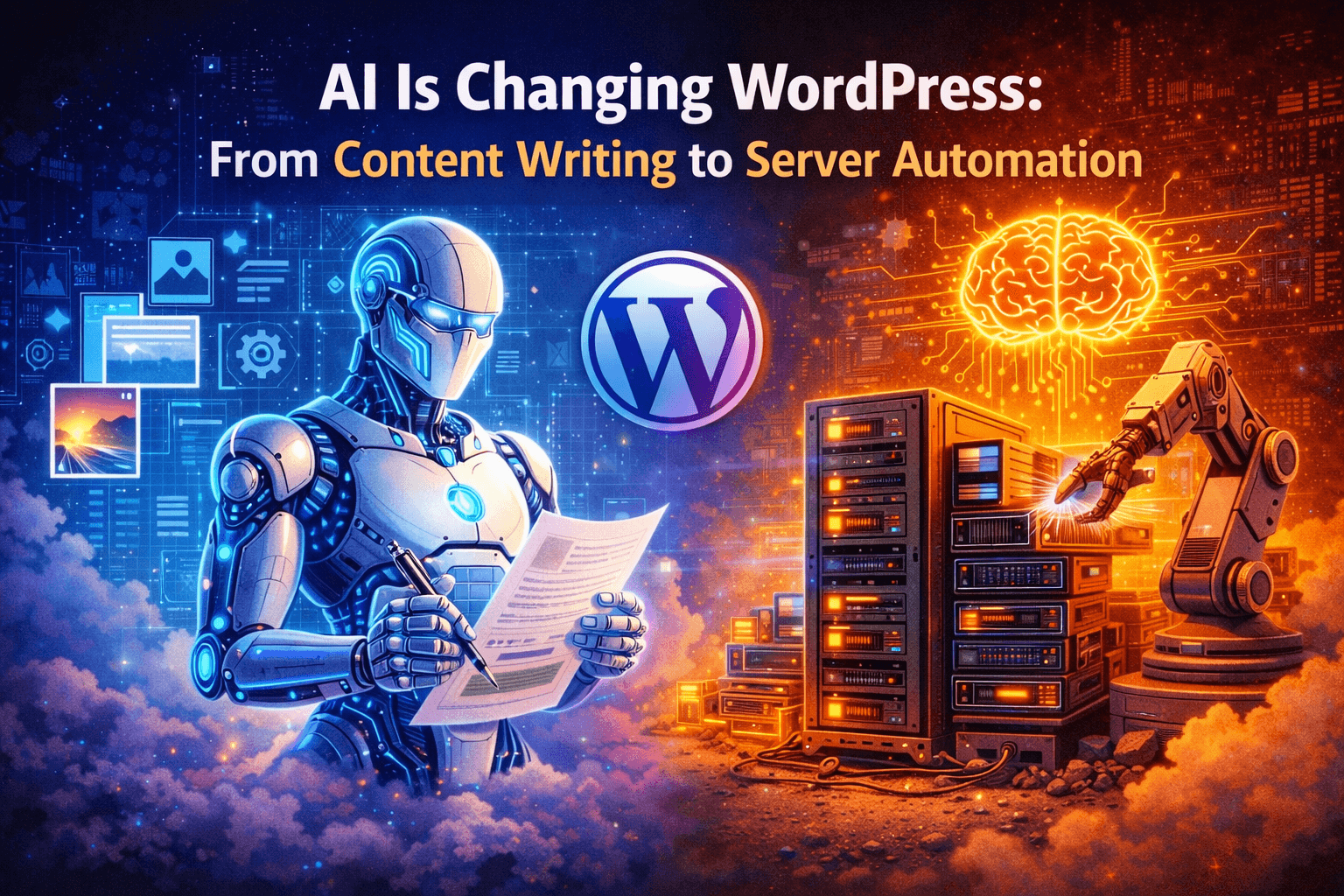
AI Has Moved From Novelty to Core Workflow
In 2026, AI is no longer a side tool for WordPress teams. It is part of the daily workflow across writing, optimization, and infrastructure operations. The shift is not just about speed. It is about reducing human error, improving consistency, and keeping sites stable as traffic grows.
Content Creation Has Evolved
AI assists in the early stages of content creation, but the strongest teams still lead with strategy. The best results come from pairing human direction with automated drafting:
- Outline generation that follows a defined content brief.
- Draft expansion based on brand tone and style guidelines.
- SEO-aware rewriting that targets search intent without keyword stuffing.
- Reusable blocks for FAQs, pros and cons, and summaries.
The win is not replacing writers. It is getting to a high-quality draft faster, then letting editors do the polish that AI cannot.
AI Is Now a Performance Layer
Performance optimization is increasingly automated. Instead of ad-hoc tuning, teams are deploying AI that continuously evaluates and adjusts the stack.
- Adaptive caching rules that respond to traffic patterns.
- Preloading critical assets when engagement signals are strong.
- Automatic image compression suggestions based on device and bandwidth.
- Query optimization alerts that identify repeated bottlenecks.
Server Automation Is the Biggest Leap
Infrastructure is where AI delivers the largest compound effect. The goal is fewer incidents and faster recoveries.
- Smart scaling based on traffic and queue depth, not just CPU.
- Anomaly detection for slow requests and failing dependencies.
- Auto-healing for crashed processes or failed deployments.
- Rollback recommendations based on error rates and response time.
This is what makes modern WordPress hosting feel stable under pressure. Automation reduces the time between issue detection and resolution, and it reduces the number of issues that ever reach users.
AI Is Changing Operations, Not Just Features
The most forward-looking teams use AI for operational consistency:
- Summaries of deploy changes with risk indicators.
- Structured incident reports built from logs and traces.
- Predictive maintenance for disk usage and backup health.
- Changelog generation with user-facing release notes.
This is the new baseline for professional WordPress management.
Where Humans Still Matter Most
AI is powerful, but it does not replace judgment. The best outcomes still depend on human decisions in these areas:
- Content positioning and audience research.
- Security policies and access controls.
- Pricing, messaging, and brand voice.
- Strategic roadmap decisions.
AI accelerates the execution layer, but the strategy still needs humans.
What to Expect Next
The next wave is already here in early form:
- Model-driven personalization by visitor segment.
- AI-powered A/B test generation for layouts and copy.
- Automated QA for plugin compatibility and performance regressions.
- Continuous optimization of server rules without manual tuning.
The Takeaway
AI is now embedded across the WordPress stack, from content to infrastructure. The teams who treat AI as a system, not a single tool, are getting better speed, lower costs, and fewer incidents.
If you want AI-driven operations without the overhead, XeroWP builds it into the platform.


